Hard Water Window Cleaning in Waterbury, CT
Use the homepage contact form to request a quote.
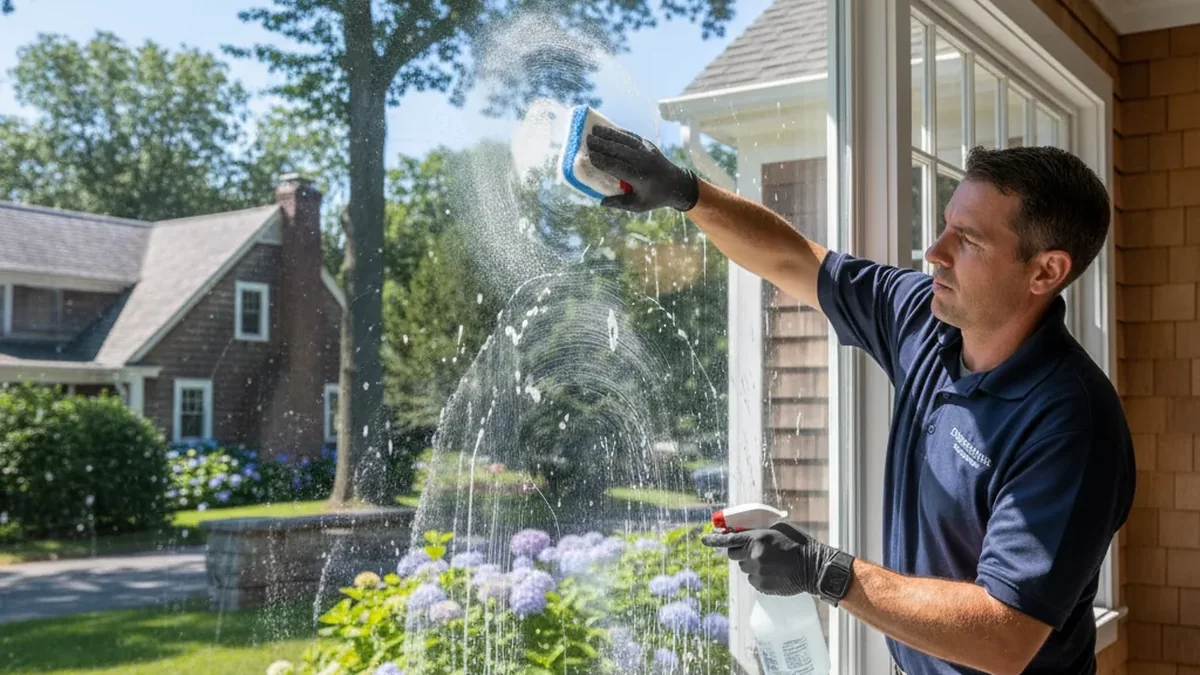
Waterbury's municipal water supply is harder than most of Connecticut. The calcium and magnesium minerals it carries don't just leave spots - they etch into glass when water evaporates repeatedly on the same surface over months or years. Standard window cleaning removes surface grime. It doesn't remove mineral etching. When Waterbury windows still look hazy after a regular cleaning, mineral deposits are almost always the reason. Miguel specifically treats mineral-etched windows. The process is different from standard cleaning - it requires dissolving the mineral deposit chemically before the final clean and pure water rinse. Done correctly, glass that has looked cloudy for years can look clear again.
What Mineral Deposits Look Like on Waterbury Glass
Early stage - water spots. Round or irregular white or off-white spots where individual water droplets have dried and left their mineral content. At this stage, a proper cleaning with appropriate treatment removes most of the spotting. Moderate stage - surface haze. After multiple seasons of deposit accumulation, the individual spots merge into a general haze that reduces the glass transparency. The window doesn't look dirty - it looks permanently cloudy. Standard squeegee cleaning doesn't touch this layer. Advanced stage - etching. Mineral deposits that have been building up for years can etch into the glass surface itself - microscopic pitting that scatters light. At this stage, chemical treatment can reduce the haziness significantly but may not restore the glass to original clarity. Miguel will tell you honestly at the estimate whether what you have is treatable or whether the glass is etched beyond restoration.
Sources of Hard Water Deposits on Waterbury Windows
Municipal supply contact. Older Waterbury homes with single-pane or storm window setups that experience condensation cycles - particularly on north-facing windows and in bathrooms - accumulate municipal supply mineral deposits from condensation water evaporating directly on the glass. Irrigation system overspray. Waterbury homes with lawn irrigation systems where heads spray onto window glass build up mineral deposits quickly during watering season. The repeated evaporation cycle concentrates the deposit layer faster than condensation alone. AC condensate runoff. Window air conditioning units drain condensate water that runs down the exterior glass repeatedly through the summer. The evaporation deposits from AC condensate are among the fastest-building deposit sources on Waterbury windows. Older storm windows. The space between a primary window and a storm panel traps humid air that condenses on both glass surfaces. Older storm window setups in Town Plot, Bunker Hill, and the Chase Parkway area accumulate interior-surface mineral deposits that can't be reached without removing the storm panel.
The Treatment Process
Inspection and assessment. Miguel looks at the deposit severity before quoting - early-stage spotting, moderate haze, and advanced etching require different approaches and have different restoration outcomes. Chemical mineral dissolution. The deposit layer is treated with appropriate mineral-dissolving solution before any mechanical cleaning happens. This step softens and lifts the calcium and magnesium from the glass surface. Mechanical treatment. The dissolved minerals are worked off the glass with appropriate pads and squeegees. Pure water final rinse. The glass is rinsed with deionized pure water that contains no dissolved minerals. Water that dries on the glass after this rinse leaves no residue - the glass can air-dry completely clean.
Pricing for Hard Water Treatment
- Hard water treatment - exterior: add $3–$7 per window to standard cleaning price
- Advanced etching treatment: priced per assessment - request an estimate with a description of the window condition for an estimate
- Full exterior cleaning + mineral treatment: $175–$425 depending on window count and severity
Free estimates - Request a Free Estimate.
Hard Water FAQs
My windows were just cleaned last year and they're hazy again. Is that normal?
Haze that returns quickly after cleaning is usually mineral deposit buildup from an active source - irrigation overspray, AC condensate, or a storm window condensation cycle. Standard cleaning doesn't remove the deposit layer. Miguel treats the deposit and advises on whether the source can be reduced.
Can etched glass be restored?
Surface etching from accumulated mineral deposits can often be improved significantly with proper chemical treatment. Glass where the etching has been allowed to develop for many years may not fully restore - Miguel assesses and gives an honest answer on what's achievable before charging for treatment. See also: Storm window cleaning → See also: Best window cleaning → Back to homepage →